Harbor Info & Dockside Briefing
Homer Harbor is one of the busiest small-boat harbors in Alaska. Here's everything you need to know about getting there, getting oriented, and getting out on the water with confidence.
Key takeaways
What you’ll learn in this article
Orientation happens the evening before your trip at the boat slip — plan to arrive at Homer Harbor for orientations at 7pm or 8pm.
Parking is free and plentiful in the large lot adjacent to the harbor. Don't park on the dock itself.
The fuel dock opens at 6am during peak season — yet your boat will already be full. Be sure to fill up on your way back in.
Start the engine first thing when you board. Let it warm up for several minutes before leaving the slip.
Getting to Homer Harbor
Homer Harbor is located at the base of the Homer Spit, a 4-mile natural land formation that extends into Kachemak Bay. From downtown Homer, drive south on Lake Street, which becomes the Spit Road. Stay on the Spit Road all the way to the end — the harbor complex is on the right. Total drive from the center of town is about 10 minutes.
If you're flying in, Homer Airport is located about 3 miles from downtown. Rental cars are available at the airport. Several hotels and lodges are located on the Spit itself, within walking distance of the harbor.
Parking
Free public parking is available in the large gravel lot at the base of the harbor complex. The lot is large and rarely fills completely, even during peak season in June and July. Do not park on the loading docks or float access ramps — these are reserved for active boat operations and are monitored.
If you're staying on the Spit, many accommodations are close enough to walk to the harbor with your gear. The harbormaster's office is at 907-235-3160 if you have questions about the facility.
Finding the boats
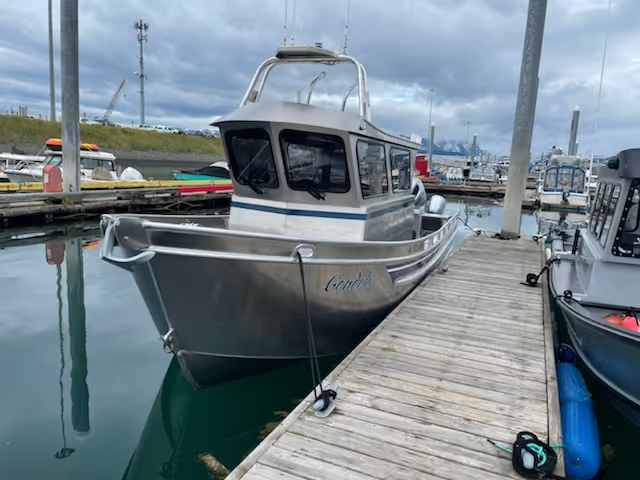
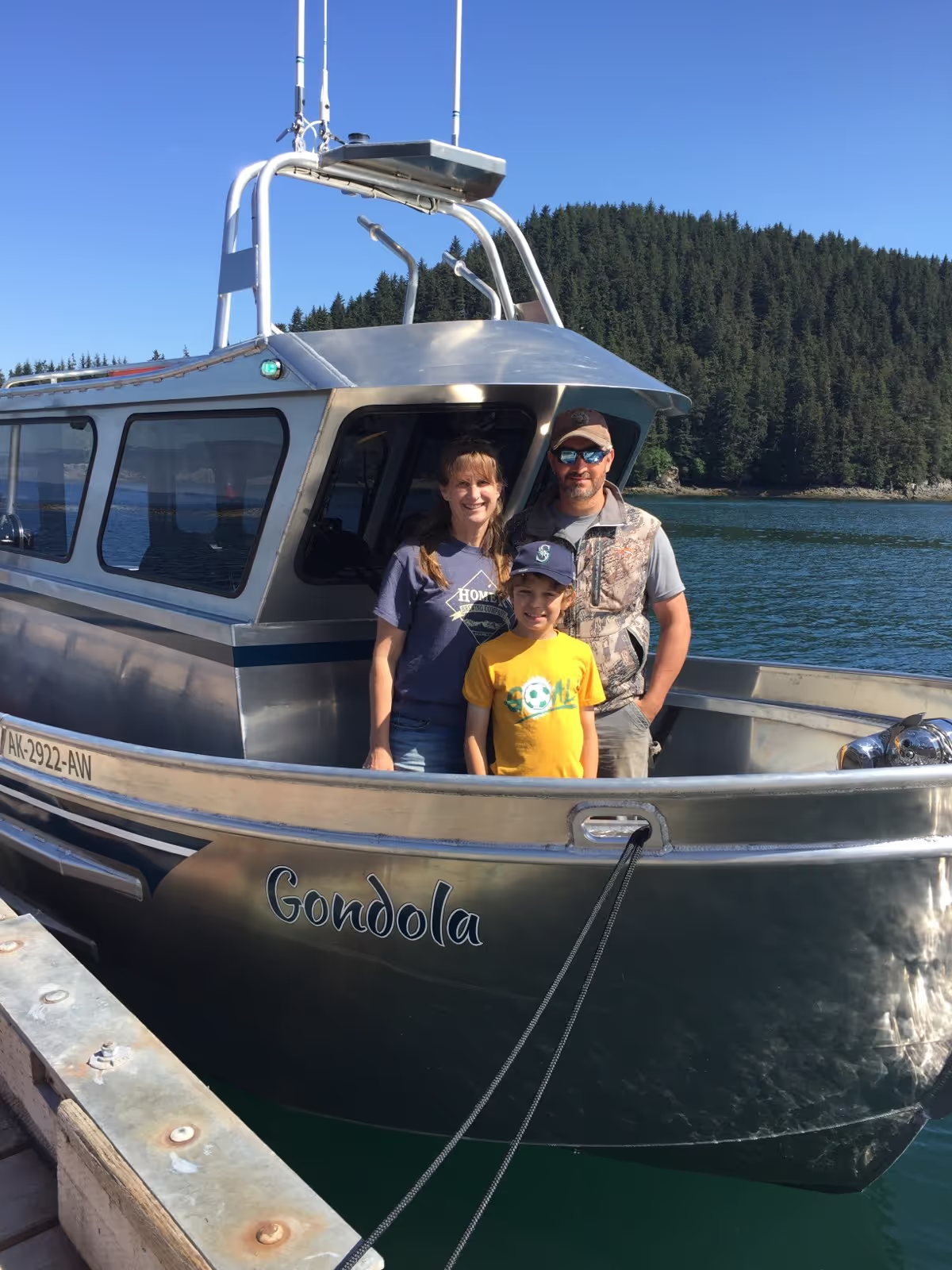
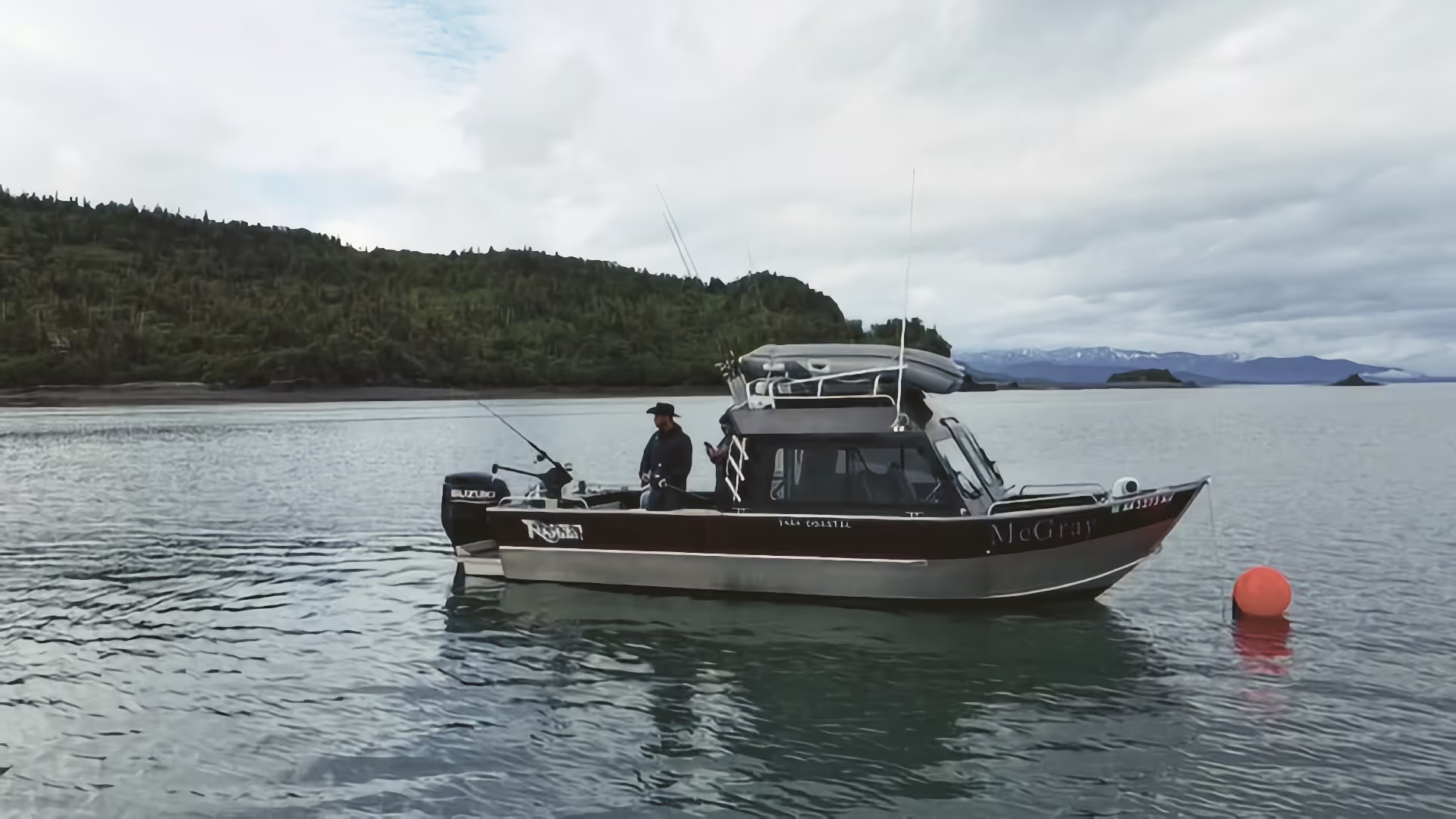
Two weeks prior to you trip we will email you the exact location with a map. At orientation the evening before your trip, we'll make sure you know exactly where to find the boat. Both the McGray and Gondola are in permanent, assigned slips — they don't move. If for any reason you can't find the slip in the morning, call 907-630-0928.
Homer Harbor uses a standard lettered-and-numbered slip system. Your slip assignment will be confirmed at orientation.
Tackle shops and supplies
Two tackle shops are located near the harbor and open early during peak season:
- Sportsman's Supply — near the harbor, opens 5–6am during June, July, and August.
- The Sport Shed — also near the harbor, similar early hours.
- The Gear Shed — located about 5 miles out East End Road. Best selection of marine hardware, parts, and gear if you need something specific.
Buy your bait — herring, squid, or whatever else you prefer — at one of these shops the morning of your trip. Fresh bait makes a meaningful difference for halibut. You'll also need hooks and swivels.
The fuel dock
Homer Harbor has a fuel dock open from 6am to 9pm during peak season. There are two fuel dock positions, both owned by the same company — no price difference between them. Fuel at the dock does not carry road tax, so it's cheaper per gallon than fuel at local gas stations.
When fueling the McGray, the fuel cap is on the port (left) side. On the Gondola, it's on the starboard (right) rear corner. Both caps have a detent button you must press before the cap will open. Fold the helm chair down and turn the key to auxiliary before fueling. Ask the fuel dock attendant for an oil rag to hold over the vent — occasionally a small amount of fuel can gurgle back.
Fuel dock hours
6am – 9pm, peak season (June – August)
Price
No road tax — cheaper than gas stations
McGray fuel cap
Port side, detent button on cap edge
Gondola fuel cap
Starboard rear, detent button on forward edge
Burn rate
30–50 gallons per full day typical
Tank size
McGray: ~110 gal | Gondola: ~75 gal
Morning departure sequence
The most important habit on any boat departure is to start the engine first thing and let it warm up before you do anything else. These modern four-stroke engines don't need much warm-up time, but shifting out of neutral into gear before the engine is warm risks a stall in the slip — and a stalling boat in a crowded harbor is a problem. Start it, let it run, then load your gear.
- Step 1: Board the boat. Check that all dock lines are still secure.
- Step 2: Turn the battery switch to the 'On' position (first click only — not 'combine').
- Step 3: Start the main engine. Confirm it's fully in the down position before starting.
- Step 4: Check the breaker panel — electronics and accessory breakers should be on.
- Step 5: Power on the GPS chartplotters. Let them acquire satellite signal while you load gear.
- Step 6: Check VHF channel 16. Adjust squelch: turn counterclockwise until static, then just enough clockwise to silence.
- Step 7: Tune to WX channel 2 for the current NOAA weather forecast. Confirm conditions.
- Step 8: Let the engine warm for 5–10 minutes before shifting into gear.
- Step 9: Remove dock lines in order: bow line last. Have fenders ready.
- Step 10: Motor slowly through the harbor at no-wake speed. The speed limit is enforced.
At the end of the day
Return to your slip by the end-of-day cutoff: 5:30pm May through August 9, 7:00am–5:30pm August 10 onward. Give yourself a buffer — harbor traffic and weather can add time to your return.
- Rinse the deck and fish box with the dock hose before leaving the boat.
- Tilt the kicker engine up before shutting down.
- Turn off all electronics and the battery switch when you leave.
- Secure all dock lines.
- If you used the porta pottie, empty and clean it before returning. Coast Guard regulations require dumping at least 3 miles offshore.
Fish filleting facilities are available at the harbor at no charge. Coal Point Seafoods (welovefish.com) and Homer Fish Processing (homerfishprocessing.com) both offer free fish pick-up from the harbor if you want processing or shipping.
prepare for adventure

Ready to get on the water?
Book your day on Kachemak Bay
Fully equipped boats available May–August from Homer Harbor. McGray, Gondola, and Sea Runner — check availability and reserve your date.