Local Wildlife & Birdwatching
Kachemak Bay was designated a critical habitat area in 1974 to protect one of Alaska's richest coastal ecosystems. A day on the water here is never just about fishing. The bay supports a staggering diversity of marine mammals, seabirds, and wildlife — many of which you'll encounter without specifically looking for them.

Key takeaways
What you’ll learn in this article
Gull Island, 3 miles from Homer Harbor, is Alaska's largest seabird rookery with ~10,000 nesting birds of multiple species.
Kachemak Bay supports eagles, puffins, guillemots, murres, kittiwakes, sea otters, harbor seals, Steller sea lions, orcas, beluga, minke, humpback, and finback whales.
Shearwaters and diving seabirds on the surface often indicate bait fish below — and halibut feeding beneath them.
The best binoculars for on-water wildlife viewing are 8x or 10x magnification with image stabilization if your budget allows.
The richness of Kachemak Bay
The biological productivity of Kachemak Bay is extraordinary and well-studied. The combination of tidal circulation, freshwater input from rivers and glaciers, and a unique estuarine nutrient-trap system creates conditions that support shellfish, forage fish, larger predatory fish, and the marine mammals and birds that feed on them.
The bay was designated a critical habitat area by the state of Alaska in 1974. Hunting, fishing, and recreational activities are permitted as long as they're consistent with the primary purpose of protecting and preserving fish and wildlife populations. The south shore is entirely within Kachemak Bay State Park.
Seabirds
Gull Island
Gull Island, approximately 3 miles southwest of the Homer Spit, is Alaska's largest seabird rookery. During summer nesting season (May through August), approximately 10,000 birds of multiple species occupy the island's cliff faces and ledges. The noise, motion, and scale of this colony are difficult to describe — it's one of the genuine wildlife spectacles in Southcentral Alaska.
Species found at Gull Island: tufted puffins, horned puffins, black-legged kittiwakes, common murres, pigeon guillemots, pelagic cormorants, glaucous-winged gulls, and several others. Puffins are the most sought-after sighting for first-time visitors — both tufted and horned puffins nest here, and they can be observed at close range flying to and from the water.
Other notable seabirds
Tufted Puffin
Unmistakable orange bill, white face, golden tufts in breeding plumage. Nests in burrows on Gull Island and other rocky outcrops. Found throughout the bay.
Bald Eagle
Common throughout the bay year-round. Often perched on rocks near shore or soaring along the bluffs. Opportunistic feeders — will attempt to steal fish from other birds.
Common Murre
Black and white, upright posture. Found in large dense rafts on the water throughout the bay. Dive deeply for fish.
Pigeon Guillemot
Smaller black seabird with white wing patches and red feet. Common around rocky shores and Gull Island.
Shearwaters
Surface-feeding seabirds that indicate bait fish concentrations. If you see a large flock of shearwaters actively feeding, fish below them — halibut are likely feeding on the same bait.
Marbled Murrelet
Small, elusive seabird that nests inland in old-growth forest and commutes to sea. Look for fast-flying small brown birds low over the water.
Cormorants
Pelagic and double-crested cormorants are common throughout the bay. Often seen drying wings on rocks.
Marine mammals
Sea otters
Sea otters are one of the most commonly encountered marine mammals in Kachemak Bay. They float on their backs in kelp beds, often in groups ('rafts') of dozens. They're remarkably calm around boats and can be observed at close range. Watch for them near rocky shores and around the outer islands. Sea otters play a critical role in the kelp ecosystem — they eat sea urchins that would otherwise overgraze kelp beds.
Harbor seals
Harbor seals are abundant throughout the bay, often hauled out on rocks and reefs at low tide. They'll frequently surface alongside or near your boat, watching you with characteristic curiosity. Harbor seals often follow fishing boats — they learn to associate engines with fishing activity and will attempt to steal fish off the line near the surface.
Steller sea lions
Larger and more boisterous than harbor seals, Steller sea lions haul out on specific rocky ledges throughout the outer bay. They're a federally listed species. Give them significant space when approaching their haul-out rocks — they're much larger and faster in the water than they look, and females with pups can be aggressive.
River otters and mink
River otters and mink are found along rocky shorelines throughout the bay, particularly in sheltered coves and along stream outflows. They're more commonly seen from a slow-moving or anchored boat than at speed.
Orca (killer whales)
Orca are present in Kachemak Bay, particularly in summer. Both resident fish-eating populations and transient mammal-eating populations move through the area. Encounters are not uncommon — if you see a group of dorsal fins, slow down and observe from a respectful distance. Orca are curious and may approach the boat.
Beluga whales
Beluga whales are found in Cook Inlet, primarily in the upper inlet near Anchorage, but they do occasionally appear in Kachemak Bay. The Cook Inlet beluga population is small and critically endangered — an encounter is special and should be reported to ADF&G.
Humpback, minke, and finback whales
Humpback whales are the most commonly observed large whale in Kachemak Bay during summer. They're active feeders and sometimes engage in surface behavior including breaching, lunge feeding, and bubble-net feeding. Finback whales are the second-largest animal on Earth — fast, sleek, and often identified by the distinctive pale chevron behind the dorsal fin. Minke whales are smaller and more elusive, often appearing briefly at the surface before diving.
Birdwatching tips
- Binoculars are essential. The boats include a pair, but bring personal binoculars if you have them. 8x42 or 10x42 are ideal formats for marine birdwatching — enough magnification without being too heavy.
- Morning is the most active period for both birds and mammals. Many species are less active in the afternoon wind.
- Slow down near rocky shores and islands. Wildlife is more easily observed from a slow-drifting or anchored boat than at cruising speed.
- Gull Island is worth 20–30 minutes of slow circling. Approach from downwind, keep your speed below 5 knots, and give the rock adequate clearance.
- Shorebird activity near the surface is a navigational and fishing cue — dive-bombing birds mean bait fish, which mean halibut below.
Binocular recommendation: Vortex Diamondback HD 8x42 is a well-reviewed, mid-budget option well-suited to marine wildlife viewing. Canon 10x30 IS binoculars offer image stabilization — valuable for on-water use where the boat is always moving slightly.
prepare for adventure

Ready to get on the water?
Book your day on Kachemak Bay
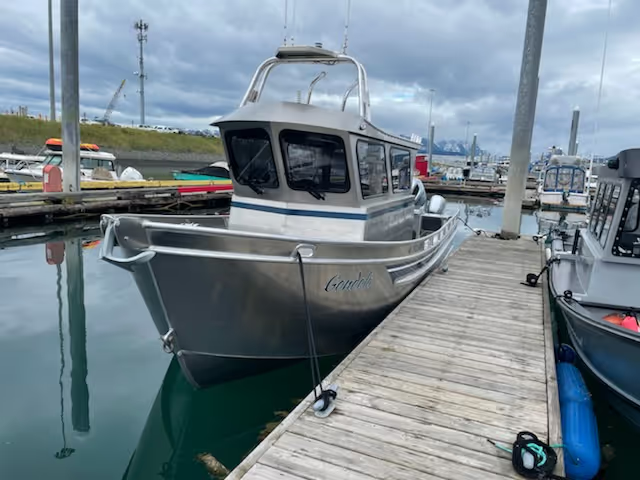
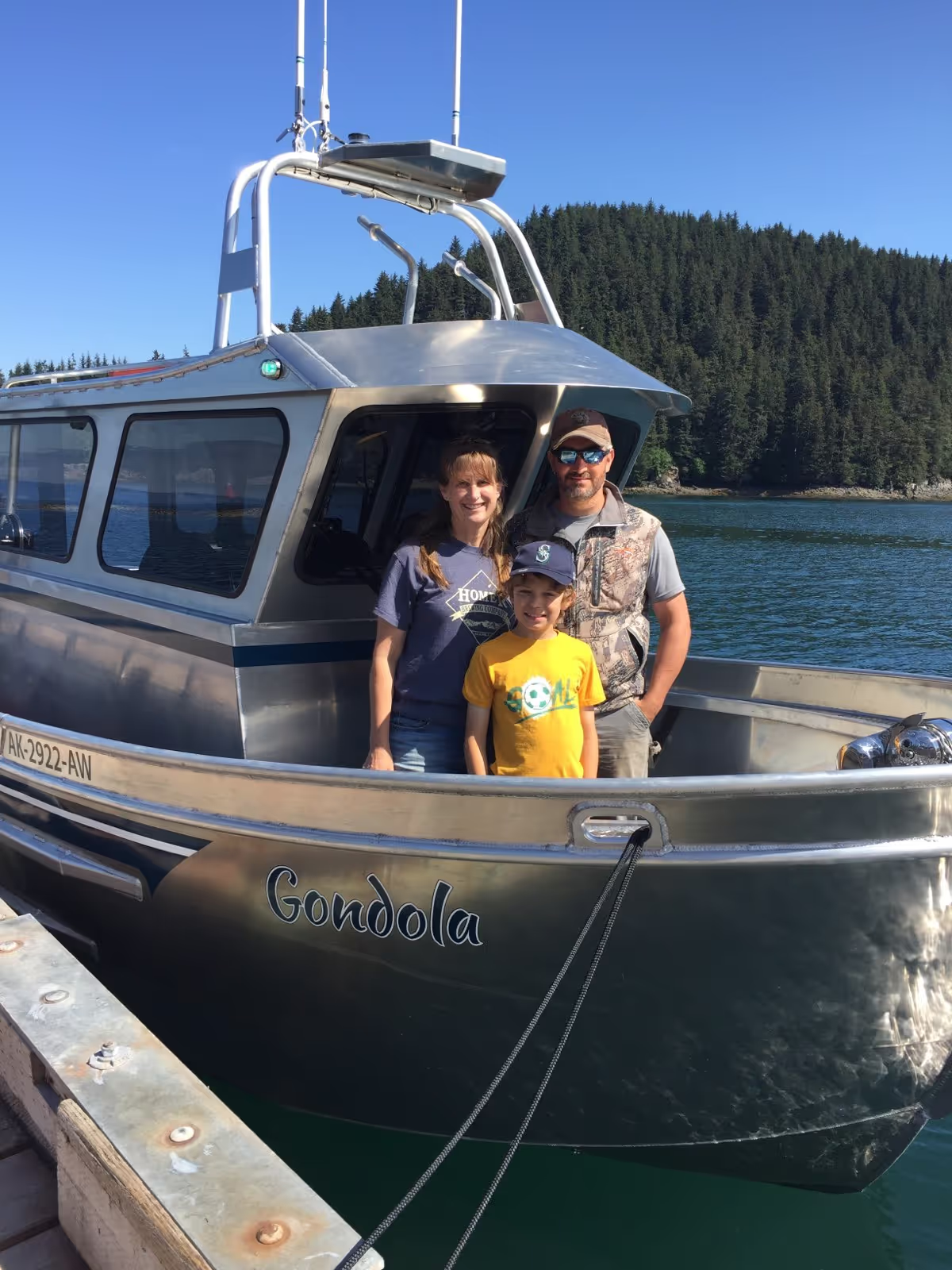
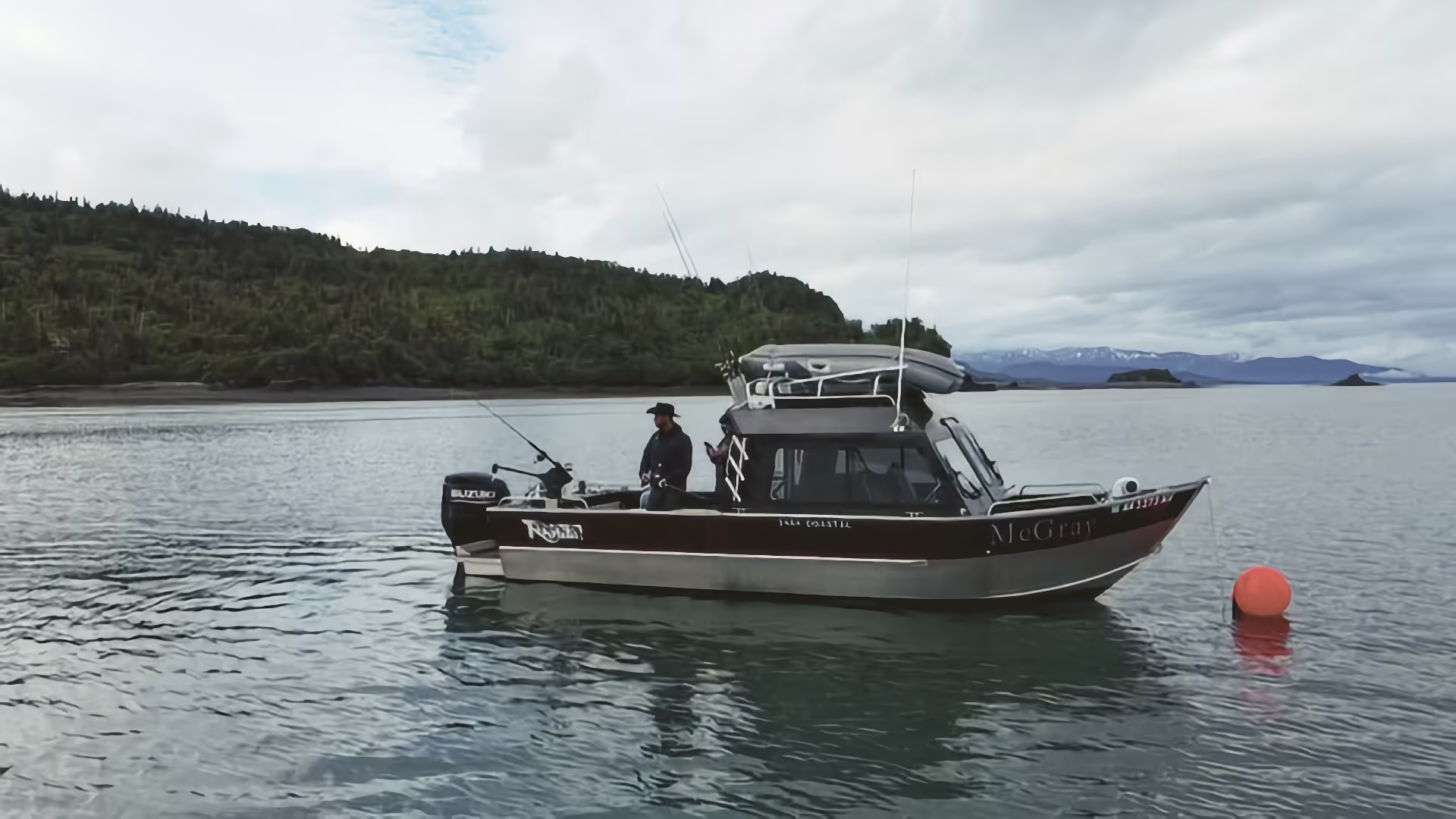
Fully equipped boats available May–August from Homer Harbor. McGray and Gondola — check availability and reserve your date.