Whale Watching
Kachemak Bay is one of the most productive marine feeding grounds in Southcentral Alaska, and the whales know it. Humpbacks, orcas, minke whales, and finback whales all move through the bay during summer. A self-guided rental boat puts you at the same level as a whale watching tour — with the added flexibility to linger as long as you want.

Key takeaways
What you’ll learn in this article
Humpbacks are the most commonly encountered whale in K-Bay during summer — active, acrobatic, and often visible from a distance.
Blow (exhalation) is usually the first sign of a whale. Scan the horizon continuously, especially after anchoring.
Federal law requires vessels to stay at least 100 yards from humpback whales. Whales that approach you on their own are a different matter — hold your position and observe.
Whale activity indicates bait fish, which indicates halibut. Fishing near active whales is often productive.
Species in Kachemak Bay
Humpback whale
Most commonly seen. 45–50 feet long, 30–40 tons. Known for dramatic surface behavior: breaching, lunge feeding, tail-slapping, pec-slapping. The blow is distinctive — bushy and columnar, 8–12 feet tall. Often seen in groups during feeding.
Orca (killer whale)
Both resident (fish-eating) and transient (mammal-eating) populations move through the bay. Tall, straight dorsal fin — up to 6 feet in adult males. Often travel in family groups called pods. Transient orcas are usually in smaller groups and move continuously while hunting. Resident orcas are more vocal and travel in larger, stable family groups.
Minke whale
Smallest of the three baleen whale species regularly seen here. 25–30 feet. Relatively fast and not given to surface displays. Often identified by a brief surface roll and the distinctive white band on the pectoral fin. Usually solitary.
Finback whale
Second-largest animal on Earth. 70–80 feet, extremely fast. Identified by asymmetric coloration (right lower jaw is white, left is dark) and a small, swept-back dorsal fin set far back on the body. Usually seen alone or in small groups. Less commonly observed than humpbacks.
Beluga whale
Rare in K-Bay, more common in upper Cook Inlet. All-white coloring. Extremely gregarious in large groups when present. Cook Inlet beluga is critically endangered — any sighting should be reported to ADF&G.
Gray whale
Occasional passage migrants. Gray or mottled coloration with no dorsal fin (only knuckles). Primarily seen in spring and fall migration.
How to find whales
The most reliable whale-finding technique is scanning the horizon for blows. A humpback blow is visible from 1–2 miles on a calm day — a white column of mist, 8–12 feet tall, rising vertically. Scan in all directions continuously, especially when anchored. Early mornings before the wind builds offer the best visibility for detecting blows.
Feeding activity indicators: large concentrations of seabirds diving on the surface — especially shearwaters — indicate bait fish concentrations. Where there are bait fish, there are often whales. This is also, as noted elsewhere, a good indicator for halibut below.
Productive whale-watching areas in K-Bay:
- The outer bay west of the Homer Spit, particularly around the Compass Rose and the Bluffs — humpbacks and finbacks feed actively in these productive offshore waters.
- The area around Gull Island — the same bait concentrations that support the seabird colony attract whales.
- The inner bay east of the spit — humpbacks are frequently sighted here in summer.
- The south shore and the waters off the mouth of Halibut Cove — good for orca sightings.
Approaching whales — rules and etiquette
Federal law under the Marine Mammal Protection Act prohibits approaching humpback whales closer than 100 yards by vessel. This rule applies regardless of your intent. The practical enforcement is based on behavior: if a vessel's approach causes a whale to change its course or behavior (diving early, changing direction, moving away), that's a violation.
The 100-yard rule does not apply if the whale approaches you. If you're stationary or at low speed and a whale surfaces within 100 yards, hold your position and observe. Whales that are curious about vessels will sometimes approach and interact directly — this is one of the most memorable wildlife experiences possible in Alaska.
If a humpback surfaces within 50 feet of your vessel: cut the engine immediately, remain quiet, and hold your position. Let the whale complete its surfacing behavior. Never attempt to touch a whale. When it dives and moves off, resume your course.
For orca: the approach distance is 200 yards for killer whales in Washington and Oregon, but in Alaska the 100-yard general standard applies. Transient orca are hunting — don't position your boat between a pod and their prey. Resident orca are more tolerant of vessels.
Vessels should never position themselves directly in a whale's path. Approach from the side, reduce speed significantly, and observe at a safe distance. If the whale changes behavior, you're too close.
Surface behaviors to watch for
Blow
Exhalation mist — the most common indicator. Humpback blows are tall and columnar. Finback blows are narrow and tall. Minke blows are small and inconspicuous.
Breach
Full or partial jump out of the water. Most commonly seen in humpbacks. The cause is debated — communication, play, parasite removal, or display.
Lunge feeding
Explosive forward surge with open mouth at the surface. Humpbacks lunge-feed when bait fish are concentrated near the surface. Often see multiple individuals coordinating.
Bubble-net feeding
Humpback group behavior where whales blow bubbles in a spiral below a school of fish, herding them into a dense ball, then lunge up through the center. Visible as a ring of bubbles on the surface before the whales emerge.
Tail fluke
The tail raised vertically as the whale dives. Used for identification — each humpback's flukes are uniquely patterned.
Pec slapping
Slapping a pectoral fin on the surface — social or communicative behavior. Fins are enormous — up to 15 feet.
Spy hop
Vertically oriented, head raised above the water to look around. Characteristic of orca but also seen in humpbacks.
prepare for adventure

Ready to get on the water?
Book your day on Kachemak Bay
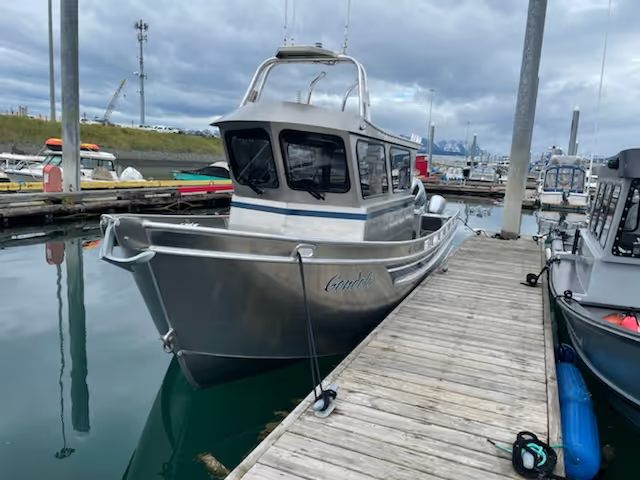
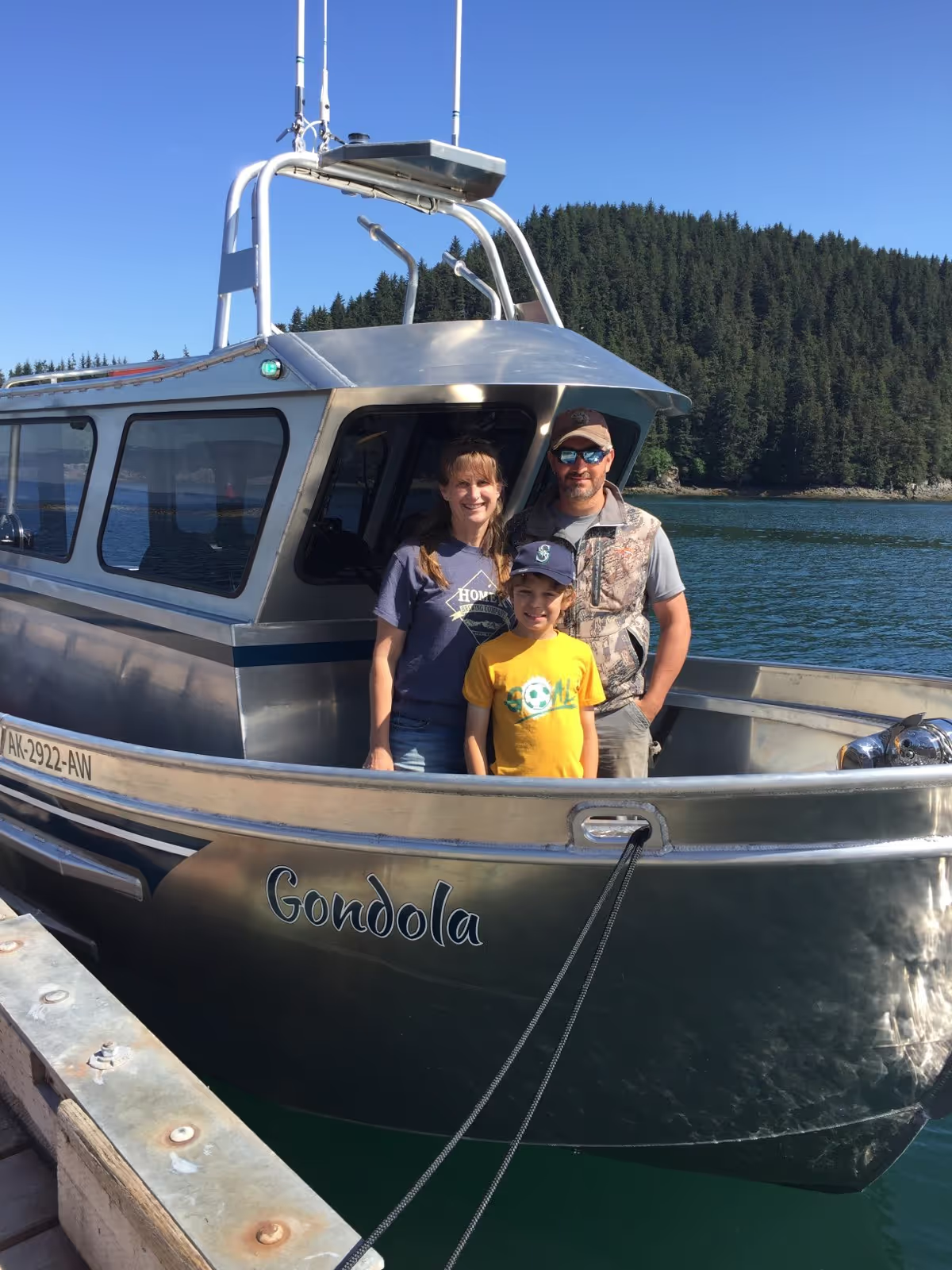
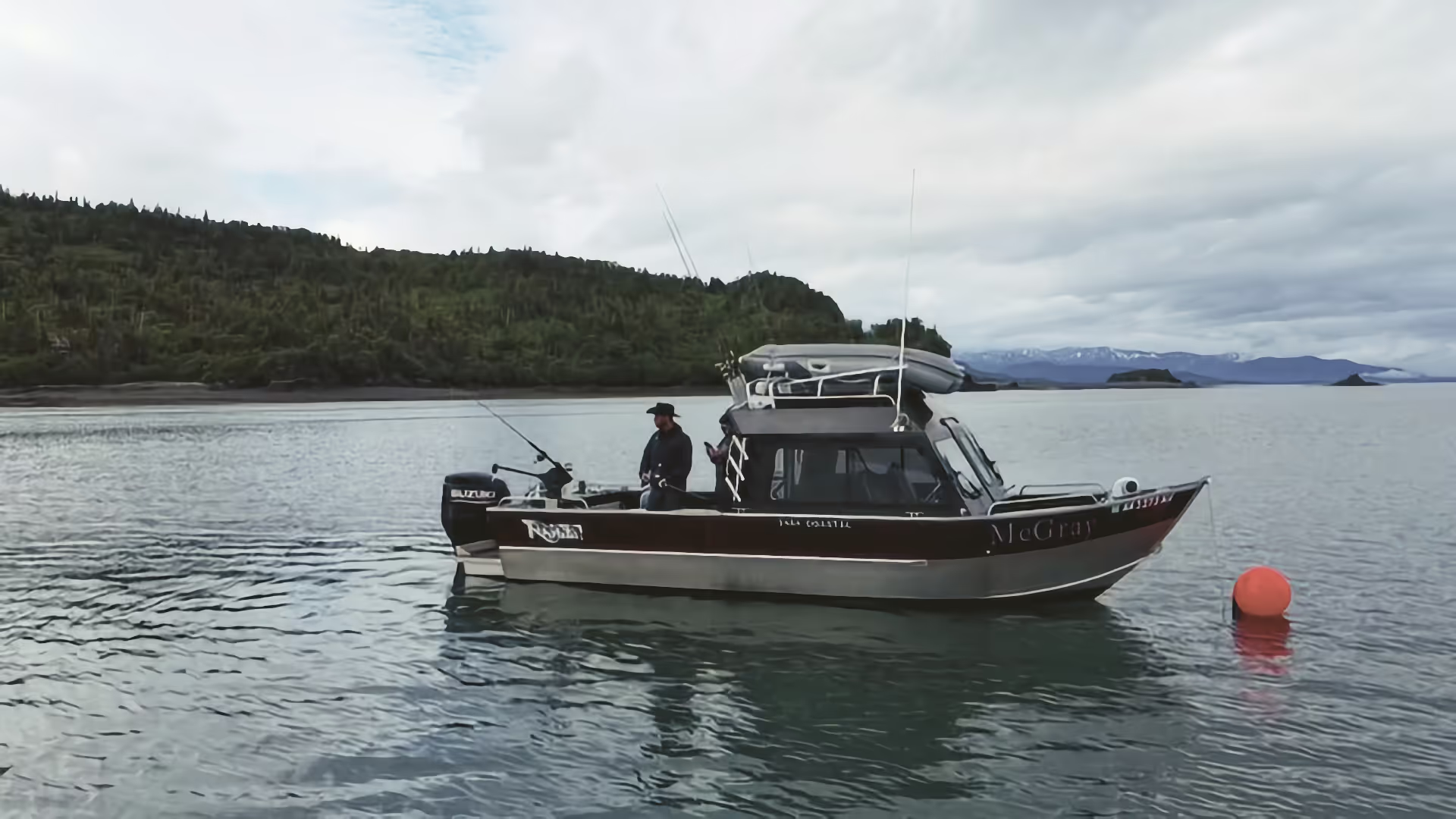
Fully equipped boats available May–August from Homer Harbor. McGray, Gondola, and Sea Runner — check availability and reserve your date.