How to Fish for Halibut and Salmon
Homer, Alaska calls itself the Halibut Capital of the World for a reason. In Kachemak Bay, catching a two-fish halibut limit in a day is the norm, not the exception. This guide covers everything you need to know before you leave the dock.

Key takeaways
What you’ll learn in this article
Unguided anglers in Area 3A can keep 2 halibut per day, any size — no annual limit.
Halibut find food by scent. Use the freshest, most aromatic bait you can find and consider injecting fish oil into it.
Do a test drift before anchoring. If the tide is running faster than 2 knots, wait for a slower stage.
The four primary fishing areas from Homer: Compass Rose, the Bluffs, Seldovia, and Up-the-Bay. Each has different depth, fish size, and current characteristics.
2026 regulations — what you need to know
Alaska fishing regulations change annually. The following reflects 2026 rules for unguided (self-guided) sport anglers in IPHC Regulatory Area 3A, which includes Kachemak Bay and surrounding Cook Inlet waters. Always verify current regulations at adfg.alaska.gov or by calling the Homer ADF&G office at (907) 235-8191 before each season.
Halibut — unguided
2 per day, any size. No annual limit. Note: charter/guided anglers have different, more restrictive limits — those rules do NOT apply to K-Bay renters.
King salmon — K-Bay
1 per day, any size, April 1–August 31. Lower Cook Inlet south of Bluff Point (59°40.00'N), including Kachemak Bay.
Coho (silver) salmon
Available mid-July onward. Verify current bag limits at adfg.alaska.gov — limits adjust in-season.
Rockfish
3 per day total; maximum 2 pelagic species; no yelloweye retention May 27–June 30.
Fishing license
Required for everyone 16+ who plans to fish. Buy online: admin.adfg.state.ak.us/license
In-season updates
Emergency orders can change limits with 24–48 hours notice. Check adfg.alaska.gov before each trip. Homer hotline: (907) 235-6930.
Where to fish — the four main areas
Compass Rose (10,000 Chickens)
~19 miles from Homer Harbor. Large flat area, all about 100 feet deep. Known as the most consistent producer — limits are common here. Best for groups wanting numbers rather than trophy size. Farthest from harbor so plan your weather window carefully.
The Bluffs (Anchor Point to High Bluff)
20–60 feet of water along the bluffs west of Homer. Slower fishing but better odds at a trophy-class fish. 1-pound sinker usually sufficient — current runs harder offshore. Good north/northeast wind option.
Seldovia
150–250 feet of water, position directly in front of Seldovia Bay. Excellent year-round holding area. Accessible in most wind directions except hard south. About 20 miles from Homer.
Up-the-Bay (east of Homer Spit)
90–240 feet of water. Generally slower fishing but sheltered in west and southwest winds. Best fished with heavy scent — use chum bags on the anchor line to draw fish in. A reliable fallback when the outside is too rough.
Finding fish with natural cues: watch for concentrations of shearwaters and other seabirds feeding on the surface — they often indicate bait fish, and halibut feed below wherever bait fish concentrate. Humpback whales are also excellent fish indicators. If you see whales feeding, position yourself in the current below them.
Halibut tactics
Drift fishing to find fish
Before anchoring, drift with jigs through your target area. Drop your jig to the bottom, jig it actively up and down, and note your GPS position whenever you get a hit. After 2–3 productive drifts in the same area, anchor up on the concentration. This is far more efficient than anchoring randomly and hoping fish are there.
Jig fishing
Jigging is the most active method and lets you cover ground quickly. Use the smallest jig that will reach bottom — you need less weight in slower current, more weight in fast current. Preferred colors for K-Bay halibut: rootbeer/gold-fleck, white, and glow-in-dark. Chartreuse with gold fleck is a local favorite. Don't be afraid to tip your jig with a strip of salmon belly or a piece of herring — adding natural scent to an artificial lure significantly improves results.
Jigging tip: work the jig from just off the bottom up about 3–4 feet, then drop it back. Vary your retrieve cadence. Halibut often hit on the drop. If you feel weight rather than a strike — anything that wasn't there before — set the hook immediately.
Bait fishing at anchor
Anchored bait fishing is the most productive method for numbers of fish. The bait hierarchy for Kachemak Bay halibut:
- Herring: best scent and oil content. Most consistently effective. Use whole or butterflied — butterflying (removing the backbone) improves action and makes hookups easier.
- Pollock: catch your own at the tip of the Homer Spit with metal jigs near Land's End. Effective for avoiding small fish — the larger bait selects for larger halibut.
- Octopus: excellent large-fish bait. Good scent, durable, hard for smaller fish to steal.
- Salmon heads and carcasses: pink and chum salmon heads are excellent after mid-June when salmon are running. Avoid using king salmon parts.
- Cod: similar to pollock — durable and good for selectivity.
Bait enhancement: inject fish oil directly into your bait using a hypodermic needle (available at tackle shops). This releases a continuous scent trail that draws fish from up to half a mile away. Chum bags can also be tied to your anchor line — 20+ pounds of chopped herring mixed with fish oil creates a significant scent corridor in the current.
Rigging for halibut
Hooks
16/0 circle hook for smaller baits (herring, squid). 18/0 for large baits (salmon heads, pollock). Circle hooks are highly effective for halibut — they self-set in the corner of the mouth.
Sinkers
As light as possible while still reaching bottom. 6 oz to 3 lbs depending on current. Test: if the sinker bounces on the bottom intermittently, you have the right weight. If it drags continuously, go heavier. If it doesn't reach bottom, go much heavier or wait for slower tide.
Leader
Fluorocarbon leader, 80–150 lb. Halibut have good eyesight and can see heavy mono in clear water.
Mainline
50–130 lb Spectra or Kevlar braid. Green braid statistically gets more bites. Braid has almost no stretch — critical for feeling bottom and setting the hook in deep water.
Depth
Fish 5–10 feet off the bottom. Use the sonar to confirm you're reading the actual bottom, not a mid-water bait school.
Subduing large halibut — safety critical
Large halibut are dangerous. A 100+ pound halibut in a small boat can destroy equipment and injure crew. Never bring an unsecured halibut aboard.
The sequence for landing a large halibut:
- When the fish is at the surface, gaff it in the 'shoulder' area — the thick muscle forward of the dorsal fin. This often causes the fish to freeze momentarily.
- For a shot fish: shoot 1 inch behind the upper eye. Load 2 shells — the first sometimes misfires. Keep the barrel close to the fish but NOT in the water. Fire the second shot into the water if the first killed the fish cleanly.
- Once the fish is subdued: rope the tail if possible, cut the gills to bleed the fish, and let it hang over the side for a few minutes to bleed out. Bleeding improves meat quality significantly.
- Keep the gaff in the fish until it is physically in the fish box. Pulling the gaff causes the fish to wake up again.
- Hog-tie large fish as quickly as possible — legs folded, secured with rope — before moving it around the boat.
Hold your sinker when bringing fish up from depth. A 2–3 pound sinker swinging on a rod tip is a dangerous wrecking ball. Teeth and windows have both been broken by flying sinkers.
Salmon fishing
King (Chinook) salmon
King salmon are present in Kachemak Bay as feeder kings year-round, with additional returning spawners from late April through August. The primary method is trolling — run along the bluffs west of Homer (from the Spit to Anchor Point), at the mouths of small bays along the south shore, and anywhere you see birds feeding actively on bait fish.
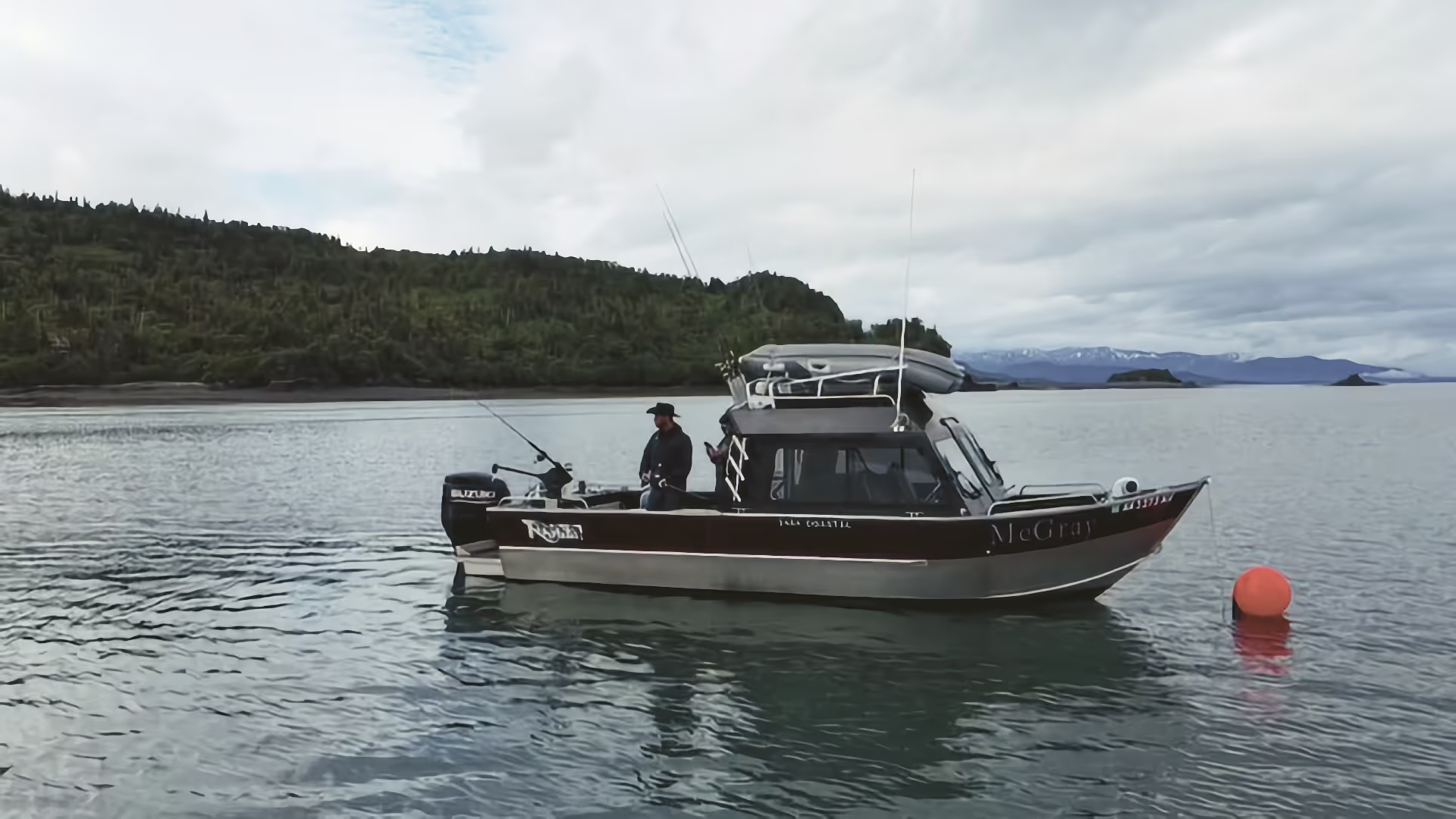
Effective lures and setups: troll herring behind a flasher at 2–4 knots. Hootchies and tube flies also produce fish. Set gear at multiple depths simultaneously — kings can be anywhere from mid-water column to 10 feet off the bottom. On the McGray, use the Easy Troll plate on the main engine to slow your trolling speed without using the kicker.
Current limit: 1 king per day, any size, April 1–August 31 in Lower Cook Inlet including Kachemak Bay.
Coho (silver) salmon
Coho arrive in Kachemak Bay by mid-July. They're typically found in the 8–15 pound range. Look for jumpers — coho near the surface often signal a concentration. Fish the southeastern side of the Homer Spit, near Point Pogibshi, and around the mouths of Fox River and China Poot Bay as the season progresses.
Effective methods: trolling brightly colored spoons and spinners; mooching with herring; surfcasting from the spit with lures. Drifting salmon eggs works well at tidal changes.
Rockfish
Rockfish (black and pelagic species) are abundant in rocky structure throughout Kachemak Bay. They readily take jigs fished near the bottom around rocky points and reefs. Limit is 3 per day total, maximum 2 pelagic species. No yelloweye retention May 27–June 30. Release smaller fish when possible — rockfish are slow-growing and the population benefits from allowing them to reach reproductive age.
prepare for adventure

Ready to get on the water?
Book your day on Kachemak Bay
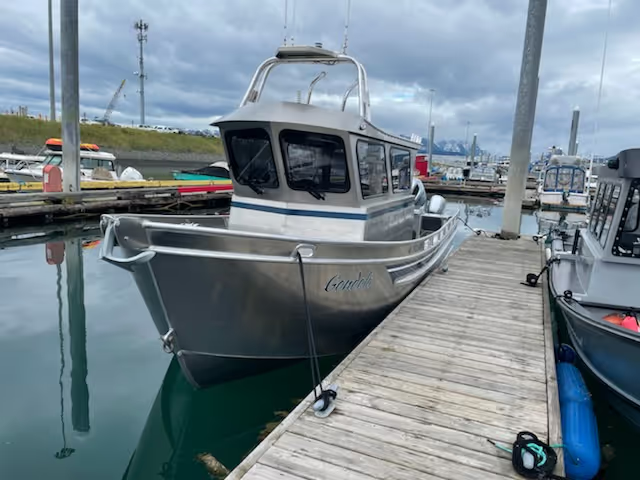
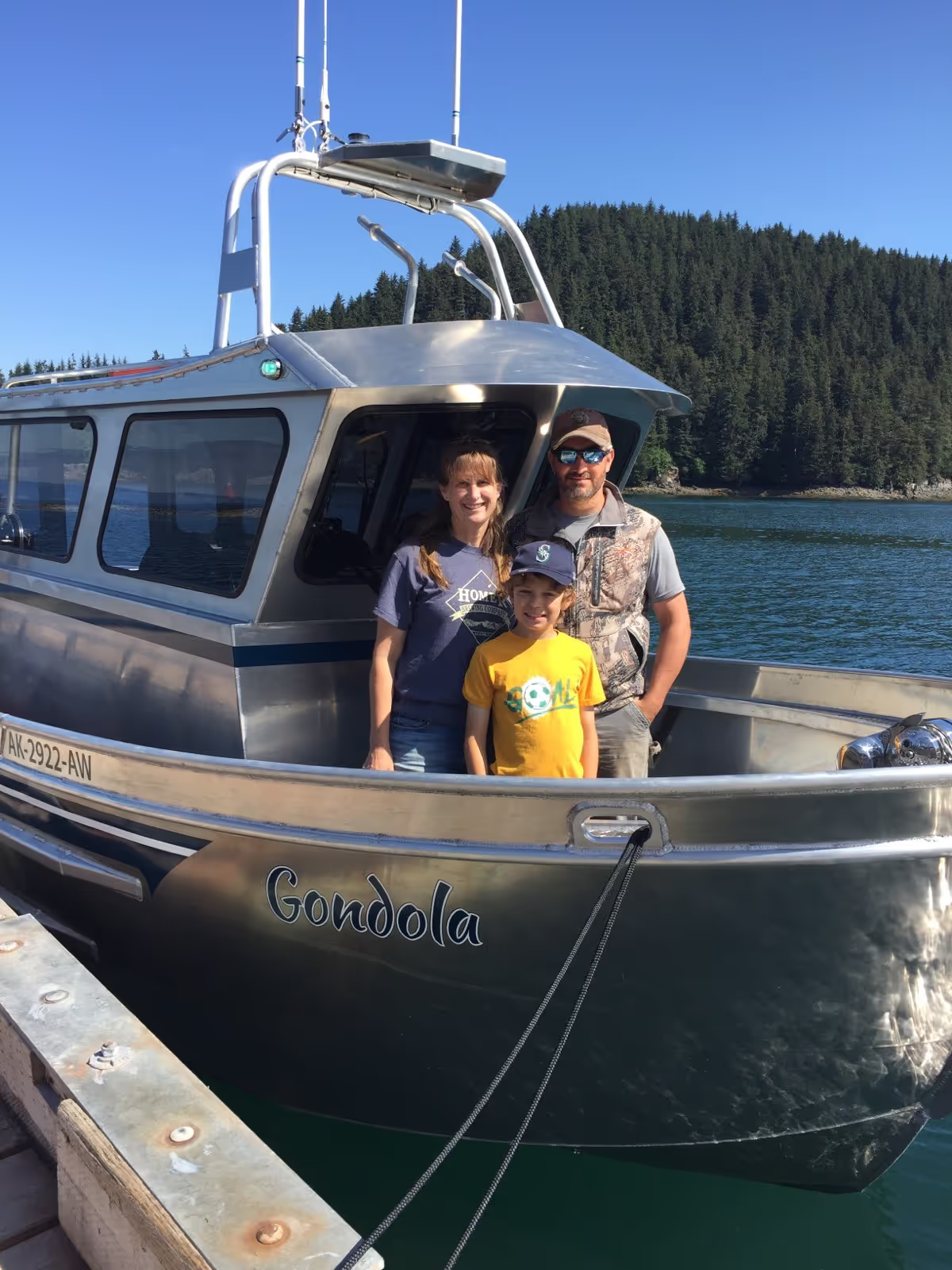
Fully equipped boats available May–August from Homer Harbor. McGray, Gondola, and Sea Runner — check availability and reserve your date.