Safety First
Kachemak Bay is a spectacular place to fish and explore. It is also a serious body of water. Cook Inlet has some of the largest tidal ranges in the world, and conditions can change faster than they appear to be changing. This page covers the practices that keep you safe.
Key takeaways
What you’ll learn in this article
Wear your life jacket. If you fall overboard, you cannot help the people on your boat who don't know how to operate it.
Anchor off the bow only. Stern anchoring in Cook Inlet tides has killed people. This is not an exaggeration.
In any emergency, use all available systems at once: EPIRB + VHF distress + channel 16 + flare gun + cell phone.
When conditions start to deteriorate, head in immediately. Don't wait for them to become severe.
Know when to be scared
The most dangerous mindset on the water is false confidence. The most dangerous situation is one where you're depending on a mechanical component to survive. Every piece of equipment on a boat will eventually fail. Your safety strategy should not rely on any single system.
This means: know the weather forecast before you leave. Know where the nearest shelter is. Know how to anchor safely. Know how to call for help through multiple channels. Know that the right decision is always to turn back early — not to push through deteriorating conditions and hope they improve.
Life jackets
Federal law requires one wearable life jacket per person on board. K-Bay boats carry 8 adult and 4 child life jackets. They're in the port seat box.
Wearing your life jacket is not just a legal requirement — it's the single most effective safety action available to you. Consider this: the person most likely to fall overboard is the person operating the boat. If you go in, can the remaining passengers operate the vessel, call the Coast Guard, and navigate back to harbor? If the answer is no, you should be wearing a life jacket.
Cold water shock is real. Water temperature in Kachemak Bay during summer ranges from about 45–55°F. Immersion in water that cold causes immediate gasping reflex, hyperventilation, and rapid loss of swimming ability — within minutes, not hours. A life jacket keeps your head above water even if you are incapacitated.
Anchoring in Cook Inlet — critical safety rules
Cook Inlet has some of the highest tidal ranges in the world. Several people have died in recent years from anchoring-related incidents in these waters. Read this section carefully.
Rule 1: Anchor off the bow only. Never anchor off the stern or any other point. When anchored off the stern, the tide and current push water over the transom. The boat fills and sinks rapidly. This is not theoretical — it has happened here.
Rule 2: Do a test drift before anchoring. Let the boat drift with the current and note the direction and speed. If the tide is running faster than about 2 knots, you may not be able to hold bottom with a 3-pound sinker in 200 feet of water, let alone anchor effectively.
Rule 3: Keep the anchor knife on the bow. If the anchor catches in a strong tide and begins to pull the bow under, the right response is to cut the line immediately. A new anchor is inexpensive. The anchor knife is there for one purpose: to free the boat in an emergency.
Rule 4: Use the breakaway system. The anchor is rigged with a zip-tie designed to break under sufficient load and allow the anchor to pull out in reverse. Extra zip ties are in the glove box.
Rule 5: Run the engine before using the windlass. The anchor winch draws significant power — have the main engine running so the alternator is charging the batteries while you use it.
Rule 6: Keep hands out of the line pile while the switch is being operated. Only one person should be controlling the windlass at any time. The line can catch a hand and cause serious injury.
Battery management
A dead battery is one of the most common failures on small vessels. The battery in your boat is similar to a car battery — it can be killed by leaving electronics running while the engine is off. Examples: GPS units, VHF radios, the diesel heater, cabin lights, the bilge pump running continuously.
Best practice: when you stop the engine (anchored), turn off non-essential electronics. The VHF on channel 16 uses minimal power and should stay on. The GPS chartplotters can be turned off if you're anchored and not moving. The heater draws significant power — run it with the engine on if possible.
The 'Combine Batteries' switch position is there for one reason: emergency starts. If your electronics dim or the engine won't crank, flip to 'Combine' for the start, then return to 'On.' Do not leave the switch in 'Combine' during normal operation.
Emergency procedures
If you have a life-threatening emergency on the water:
- Step 1: Activate the EPIRB (orange unit in cabin). Twist blue dial counterclockwise, open lid, pull unit out, press transmit.
- Step 2: Press the VHF distress button (red button under the flip cover on the hard-mounted VHF). This sends a digital distress signal to all nearby vessels with your GPS coordinates.
- Step 3: Call the Coast Guard on VHF channel 16. State: 'MAYDAY MAYDAY MAYDAY. This is vessel [name]. Our position is [read GPS lat/long from VHF display]. We have [nature of emergency]. We have [number of people] on board.'
- Step 4: Fire the flare gun if there are other vessels or aircraft in visual range.
- Step 5: Use your cell phone to call 911 or the Coast Guard directly if you have signal.
Do not activate one system and then wait. Use all of them simultaneously. The more signals you send, the faster help arrives.
On-water decision making
The hardest call on the water is turning back when conditions are marginal but not yet dangerous. By the time conditions are clearly dangerous, you may already be in trouble. Make the call early.
Warning signs to take seriously:
- Whitecaps forming — sustained 15+ knot winds.
- Swell increasing — even without wind, swell height matters for small vessels.
- VHF forecast updating to Small Craft Advisory or higher.
- Bow spray increasing to the point where visibility is affected.
- Any passenger becoming incapacitated by seasickness.
- Mechanical issue with the main engine — switch to the kicker and head in.
The K-Bay day-breeze typically builds from the west starting around 2pm on sunny days. Plan your day so you're headed back toward the harbor by 1:30pm on sunny days, giving yourself a buffer. Fishing is typically best in the morning anyway — the best anglers are already on their way home when the day-breeze hits.
Smart habits on the water
- Tell someone where you're going. Even a text to a friend with your general fishing area and expected return time.
- Check the weather before leaving the dock, not the night before.
- Monitor VHF channel 16 continuously. If you hear a MAYDAY, you may be the closest vessel.
- Don't let seasickness surprise you. Take medication the night before, not after symptoms start.
- Keep one hand on the boat at all times when moving on deck.
- Never run the engine in an enclosed space — carbon monoxide can accumulate rapidly.
- Brief your passengers before departure. Make sure at least one other person knows how to call the Coast Guard on the VHF.
prepare for adventure

Ready to get on the water?
Book your day on Kachemak Bay
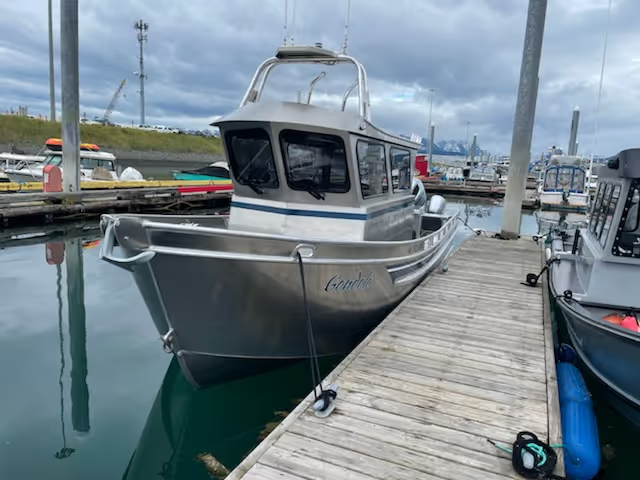
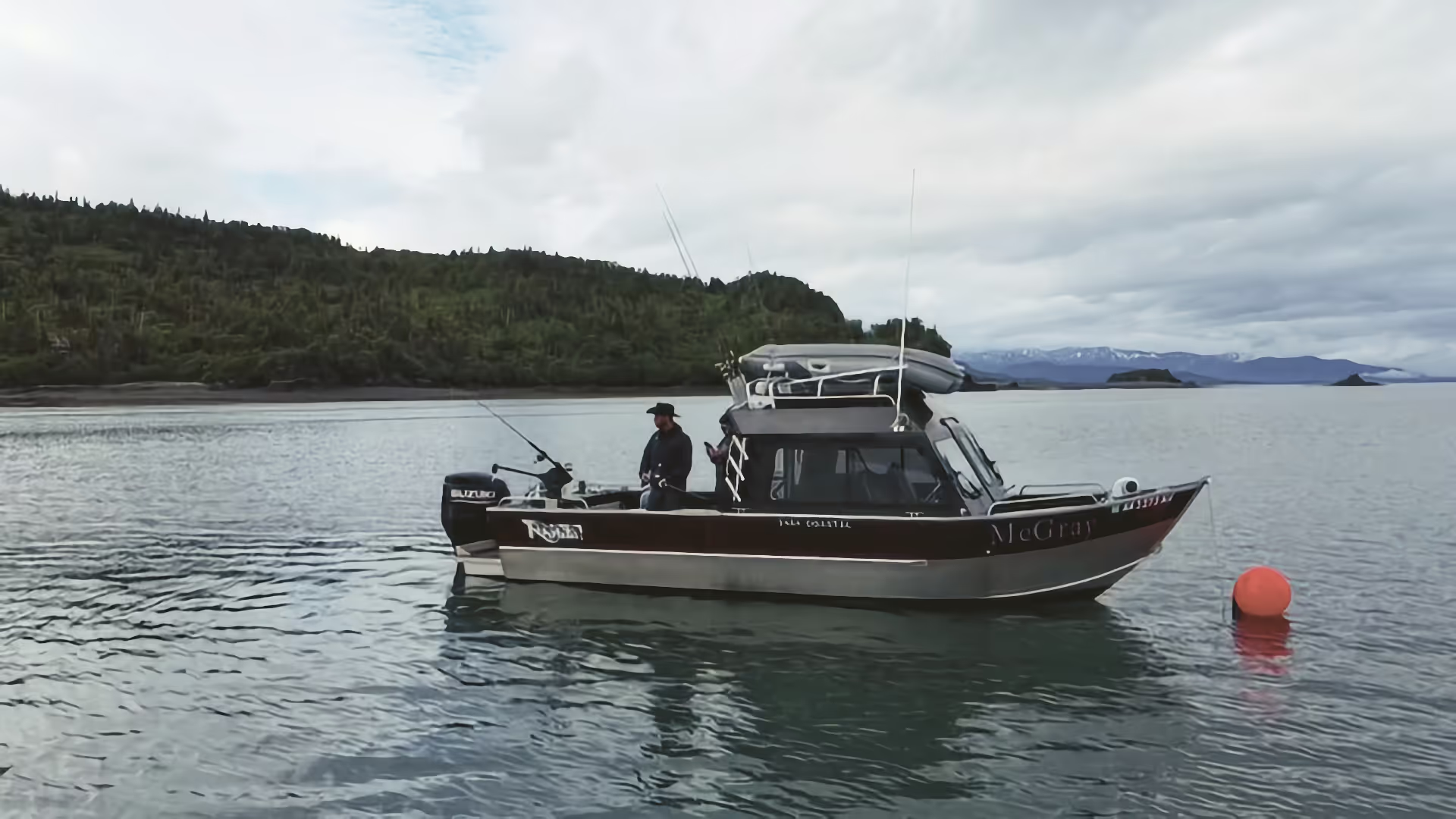
Fully equipped boats available May–August from Homer Harbor. McGray, Gondola, and Sea Runner — check availability and reserve your date.